NextLeap
Move with clarity. Train with confidence.
Team
She/Her
He/Him

She/Her

She/Her

Problem and Design Overview
Many dancers struggle to develop new skills independently because they lack the structured guidance and real-time feedback they receive in a studio. Without cues about alignment, readiness, or progress, self-practice can feel confusing or unsafe, leading to frustration, inconsistent improvement, and hesitation when approaching harder skills.
NextLeap introduces a smart mirror that brings studio-style support into at-home practice. By combining step-by-step tutorials, adaptive feedback, and progress tracking directly on the mirror surface, the system helps dancers learn skills with clearer guidance and safer progression. The design blends familiar studio habits with personalized, real-time support, making independent practice more intuitive and reassuring.
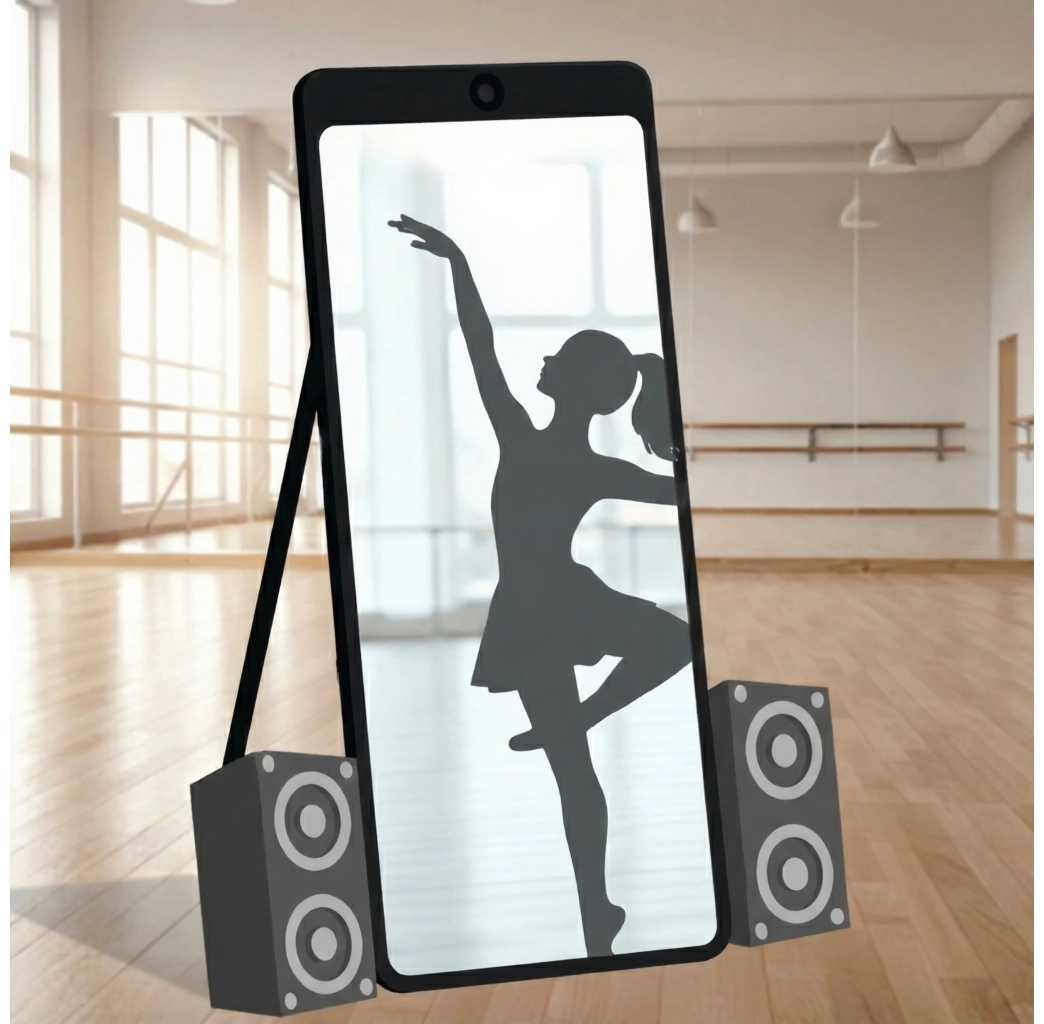
A smart mirror interface bringing studio-style feedback into independent dance practice.
Design Walkthrough
NextLeap focuses on two key tasks that support both the technical and emotional needs of dancers practicing on their own: improving movement and form through personalized feedback, and staying motivated while managing mental blocks. These tasks were chosen because they represent the most common challenges dancers face during independent practice. Together, they demonstrate how the system guides users from selecting a skill to completing a full learning session.
Improve Movement and Form Based on Personalized Feedback
Improving movement and form is difficult without an instructor, so the system begins by guiding dancers to choose a dance style, skill category, and specific movement. This provides users with a clear sense of direction. Before beginning, the mirror asks the dancer to confirm prerequisite knowledge, such as knowing first and second position. This ensures that users do not enter a skill unprepared or at risk of injury. Before practice starts, the mirror introduces the technique with a short explanation and a sequence of clearly separated steps. Each step pairs a visual demonstration with spoken guidance from the mirror’s built-in speakers, emphasizing to dancers why proper placement matters and how movement should feel.
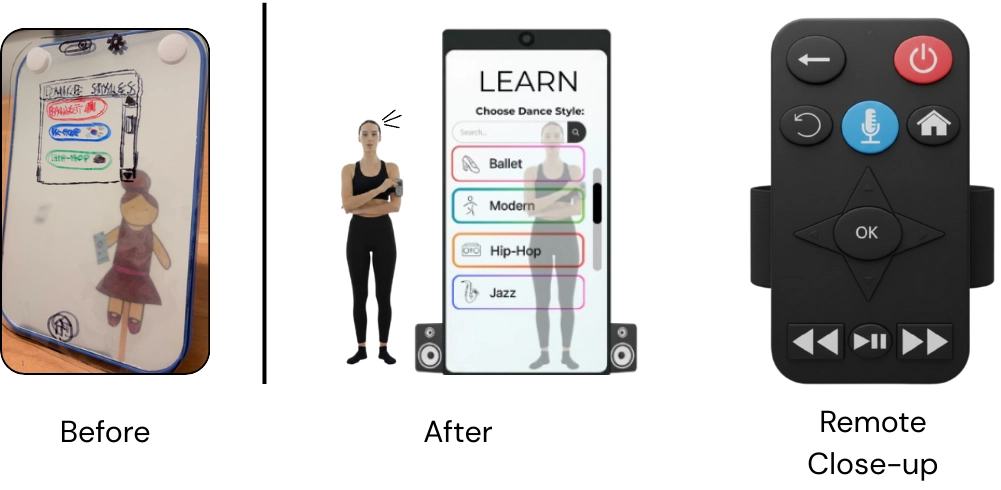
During practice, dancers can keep moving naturally and navigate the mirror using a lightweight, arm-strap remote. The remote supports simple controls, like going forward or backward in the dance tutorial, and also incorporates voice navigation. This allows dancers to issue hands-free commands mid-movement. The speakers play both the instructional audio and optional practice music, giving the session the feel of a guided studio class. A small picture-in-picture demonstration remains visible during each attempt, offering quick reminders of the technique without interrupting flow.
After the attempt, the system overlays personalized feedback directly on the dancer's recording. Corrections appear one at a time and highlight specific adjustments such as alignment, posture, or arm placement. Paired with verbal cues from the speakers, these focused annotations help dancers understand what changed and why, reducing uncertainty and supporting safer, more confident skill development.
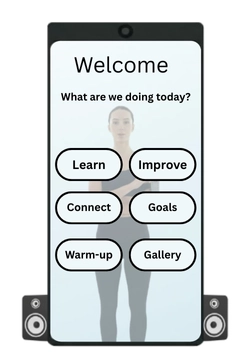
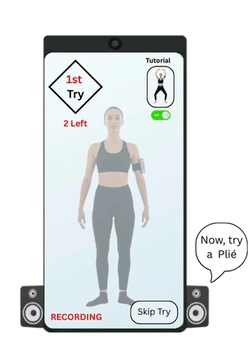
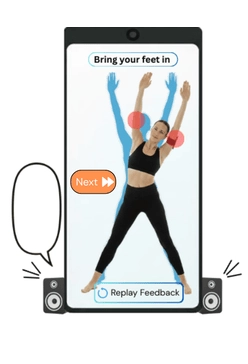
NextLeap provides step-by-step tutorials, guided practice modes, and detailed corrections to help dancers learn safely, build proper technique, and grow confident in their movement.
Stay Motivated and Overcome Mental Blocks
Staying motivated during independent practice can be challenging, especially when dancers are unsure about their progress or feel stuck. To support this, the system provides small, clearly written pieces of feedback after each attempt. These messages help users stay focused on achievable improvements rather than feeling overwhelmed by everything at once. Encouraging phrasing and safety reminders create a more supportive environment that helps reduce frustration and fear of making mistakes.
At the end of the feedback sequence, the system highlights what the dancer accomplished. A session summary displays the first and most recent attempts side by side, along with a short explanation of what has improved. This makes progress easy to understand and helps users recognize their own growth. The final screen congratulates the dancer for meeting their goal and offers next steps, such as setting a new goal or ending the session. These features help users feel a sense of progress and motivation to continue improving.
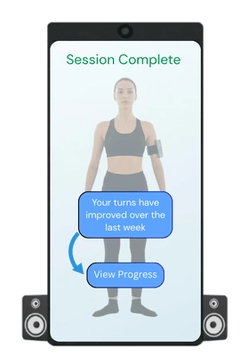
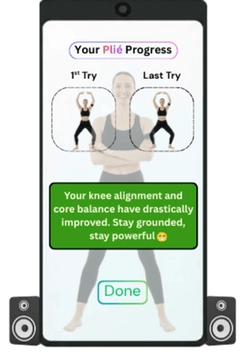
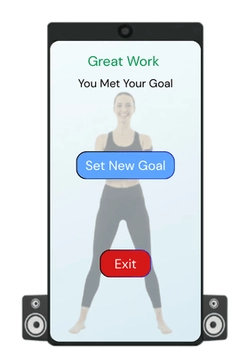
NextLeap celebrates small wins and shows visible progress to keep dancers motivated and confident in their growth.
Design Research and Key Insights
Our design research aimed to understand how dancers learn new skills, what challenges they face during independent practice, and how instruction in real studios supports safe and confident progression. To explore these questions, we interviewed four dance instructors with expertise in ballet, hip-hop, contemporary, pom, and acro, along with two student dancers enrolled in pre-professional training programs. These instructors helped us understand how they scaffold skills, assess readiness, and deliver feedback, while the students revealed motivation patterns, frustrations, and learning needs. We also conducted a contextual inquiry at a partner studio, observing classes across age groups and styles to see how feedback, correction, and progression unfold in real time. Together, these methods gave us a grounded understanding of studio learning and shaped the insights described below.
Multi-Modal Feedback Supports Skill Development
This insight emerged as instructors consistently emphasized that dancers learn best through layered, multisensory feedback. In interviews, instructors described slowing down demonstrations so students could “see where our hands are being placed,” and breaking movements into small, repeatable segments. During contextual inquiry, we observed instructors pairing visual modeling, verbal cues, kinesthetic imagery, and rhythmic timing to help dancers internalize technique. These patterns made it clear that no single form of feedback, whether it's visual, auditory, or kinesthetic, that is sufficient on its own.
This understanding shaped our decision to build multi-modal feedback directly into the system. We incorporated visual body highlights to point out alignment issues, step-by-step on-screen cues to guide pacing, and spoken explanations to mirror instructor language. Together, these elements replicate the layered instruction dancers rely on in class, making corrections more understandable and safer to apply during independent practice.
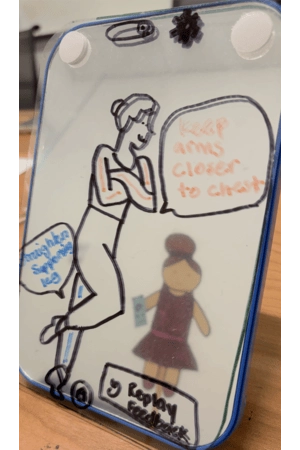
Early physical prototype incorporating multi-modal feedback to guide dancers and keep practice motivating.
Personalized Guidance and Safety-Centered Progression
Our research showed that dancers depend heavily on instructors to determine when they are ready for new skills. Instructors stressed the importance of structured skill progressions and preventing students from “jumping ahead” before mastering foundational movements. Students described feeling unsafe or overwhelmed when attempting skills too early, and our studio observations reinforced how carefully instructors monitor readiness and adjust instruction accordingly. These findings revealed a core need: dancers practicing alone lack the real-time guardrails instructors normally provide.
This insight motivated the inclusion of prerequisite checks that notify dancers of missing foundational skills and link them directly to those tutorials. We also adapted tutorials into short, sequential steps that mirror how instructors break down skills to protect students from injury. Personalized goals further support dancers by allowing them to progress at a pace aligned with their strengths and confidence. By embedding these structures, the system provides the protective scaffolding that dancers would normally receive from an instructor.
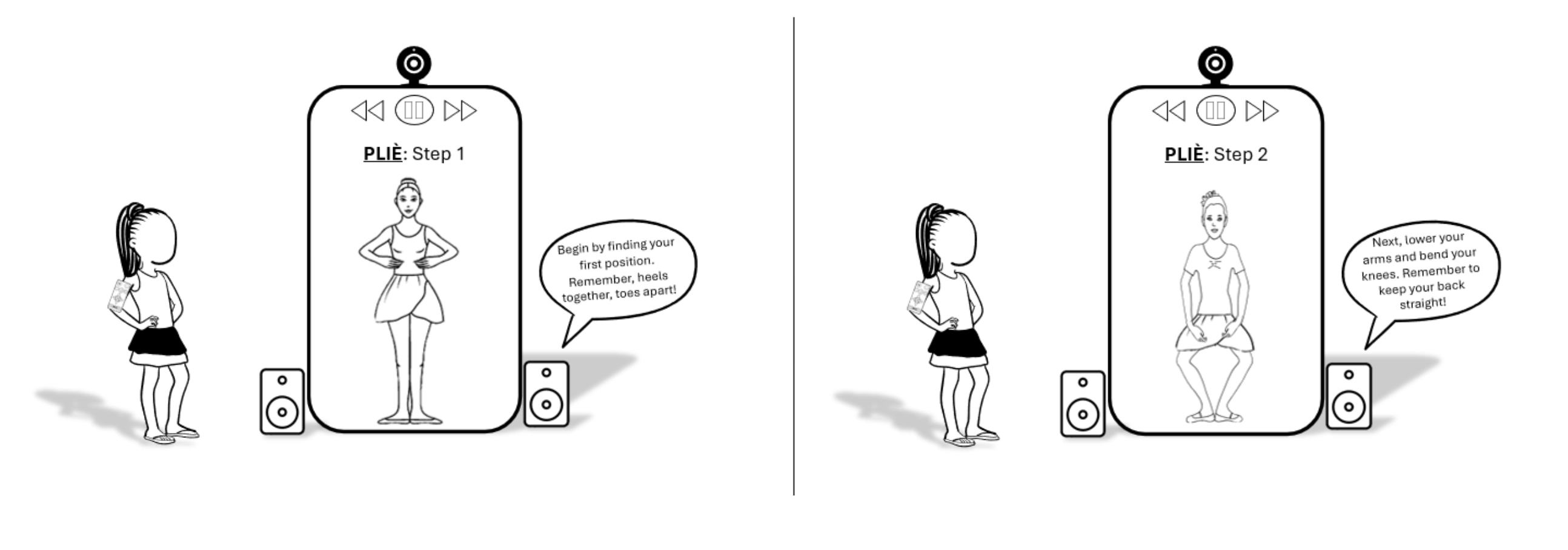
Visualizing Progress Strengthens Motivation and Skill Growth
Both instructors and students emphasized that dancers stay motivated when they can see and feel improvement over time. Students described using mirrors, demonstrations, and past experiences to track progress, while instructors spoke about revisiting earlier attempts to refine technique. During contextual inquiry, we observed dancers repeatedly checking their reflection or replaying demonstrations to understand how movement was evolving. These patterns highlighted that visible progress and the ability to compare attempts is central to building confidence and sustaining effort.
This insight shaped the development of our "View Progress" feature. By allowing users to compare earlier recordings with their most recent attempts, the system makes growth tangible and easy to interpret. Highlighted corrections and improvement notes clarify exactly what is changing and what still needs attention, while next-step suggestions guide continued practice. This mirrors how instructors celebrate improvements and offer targeted feedback, helping dancers stay motivated and trust their learning process.
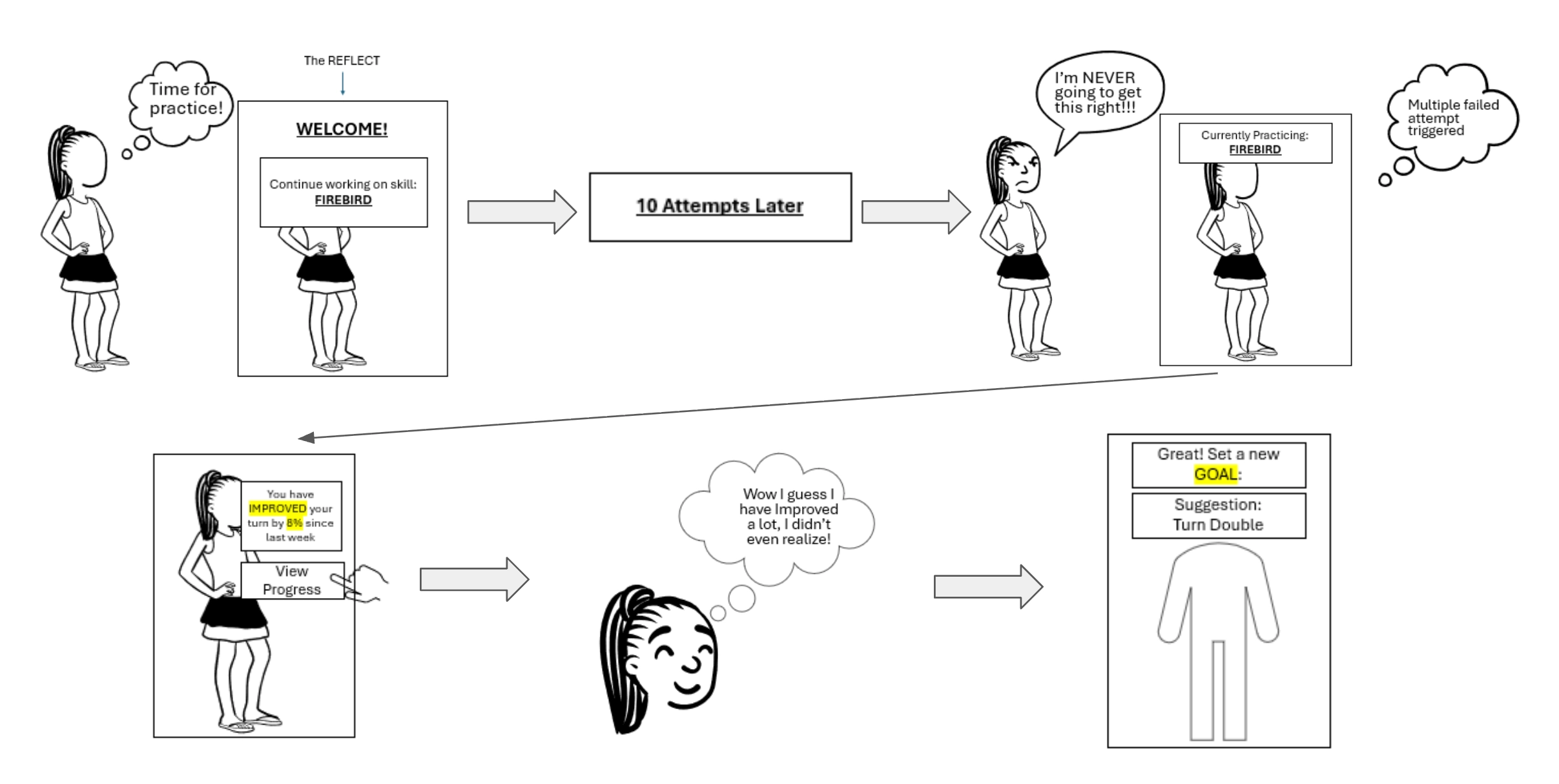
Initial storyboard showing how supportive feedback sustains dancers’ momentum and helps them recognize progress.
Iterative Design and Key Insights
Our design iterations highlighted three core breakdowns in how dancers interact with the system: navigating long lists created unnecessary cognitive load, unclear skill progression introduced safety risks, and lack of mid-attempt visual support disrupted learning flow. These issues surfaced through heuristic evaluation and usability testing, not as process steps, but as indicators of where our design failed to support real dance learning. Addressing them led to targeted improvements, including streamlined navigation, clear prerequisite guidance, and real-time visual support. These all collectively shaped a system that better mirrors studio-based instruction and reduces friction during practice.
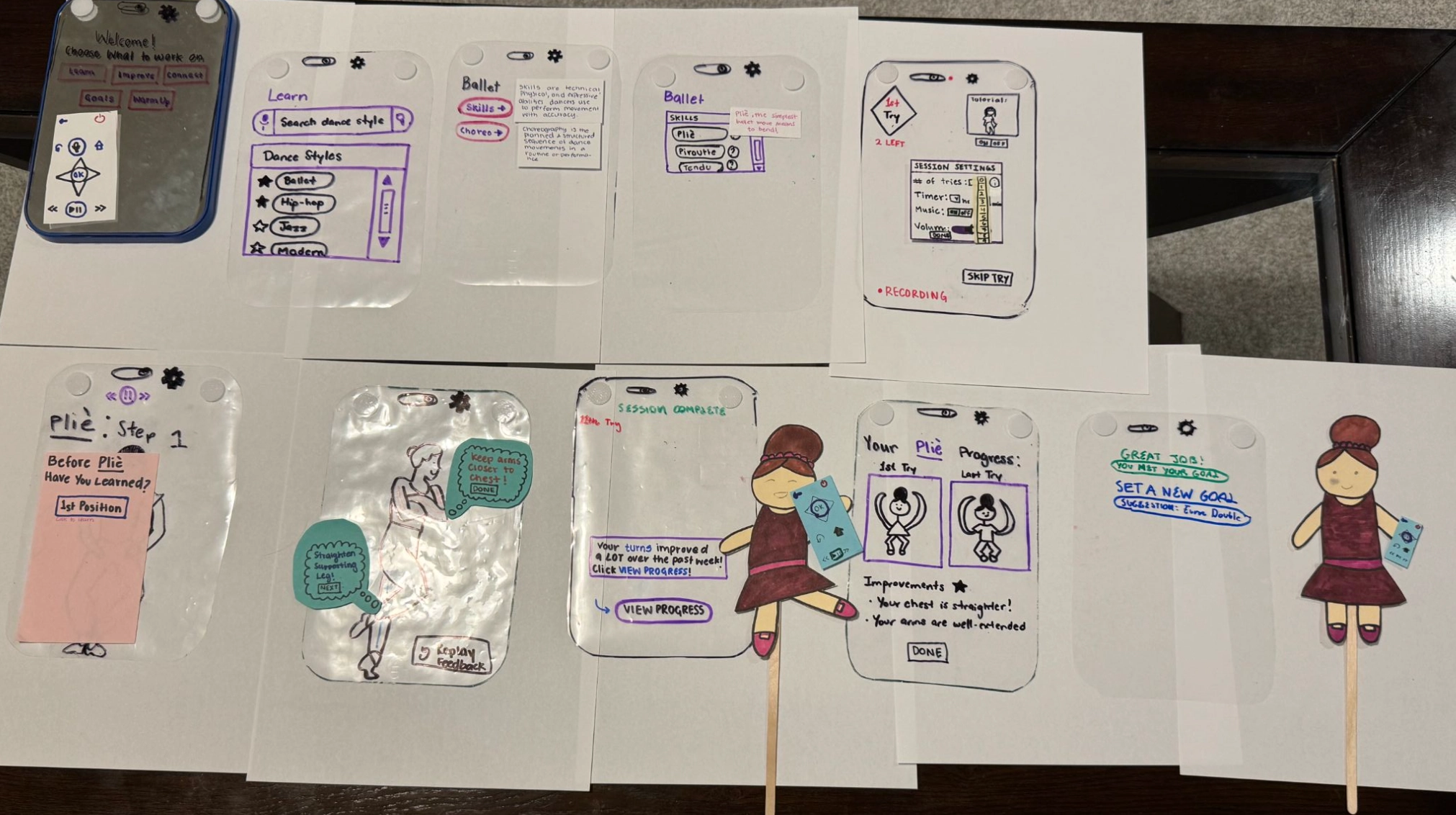
Our initial prototype lays out the paper screens for early navigation, tutorial steps, feedback, and navigation.
Improving Navigation to Reduce Cognitive Load
Our heuristic evaluation made it clear that the original design placed unnecessary cognitive load on dancers. As seen in the paper prototype, users had to scroll through long lists of dance styles and skills, and testers noted that finding a specific skill required “a lot of reading and scanning,” which slowed down practice and made the interface feel overwhelming. This directly violated "Recognition Over Recall", as users needed to remember where items were located rather than easily identifying them.
What made the design better was realizing that dancers needed multiple lightweight entry points into the content, and not just lists. In response, we introduced a search bar, voice search, and a favorites section. These additions transformed navigation from a time-consuming scan to a fast, intuitive lookup. This insight significantly improved usability by reducing memory load, eliminating friction during practice, and allowing dancers to move through the system with minimal effort.
Clarifying Skill Progression to Support Safe Learning
The need for prerequisite clarity emerged when we saw how the paper prototype let users select advanced skills without any guidance. During evaluation, reviewers raised safety concerns, noting that “high-level skills appeared equally accessible to elementary skills,” which did not reflect how real dance instruction scaffolds learning. Beginners would have no way of knowing whether they were ready to attempt a movement safely. This was not a process insight, but a fundamental design flaw: our interface failed to communicate progression, readiness, and risk.
Our design improved when we reframed this as a learning-support problem, not a blocking problem. Instead of restricting access, we introduced a prerequisite pop-up that lists foundational skills and links dancers to those tutorials. This addition shifted our system toward the logic of actual studio learning, where instructors help dancers advance safely while still giving them autonomy. This insight strengthened the instructional quality and trustworthiness of the system.
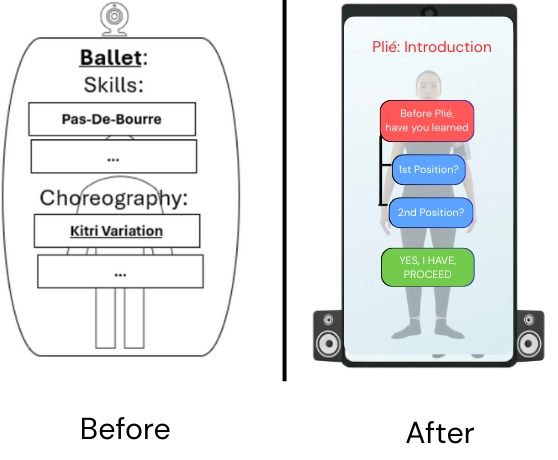
Where the initial design lacked readiness cues, the updated version provides clearer direction and safer progression.
Adding Real-Time Visual Support to Maintain Learning Flow
Usability testing revealed a critical breakdown: once dancers began attempting a skill, many “forgot what the choreography looked like” and had “no way to re-reference the tutorial.” This wasn’t merely a navigation issue, as it exposed a deeper insight about how learning unfolds. Dancing requires visual memory, and losing that reference mid-attempt disrupted flow, increased hesitation, and led to incorrect movements.
This insight led to one of the most impactful improvements in our design: adding a toggleable picture-in-picture tutorial window. The revised prototype shows how dancers can keep a small moving reference visible or hide it for a clean interface. This flexibility mirrors real studio environments, where instructors often demonstrate movements alongside dancers. It transformed attempt mode from a “recording state” into a true learning state, offering continuous support without interrupting practice.
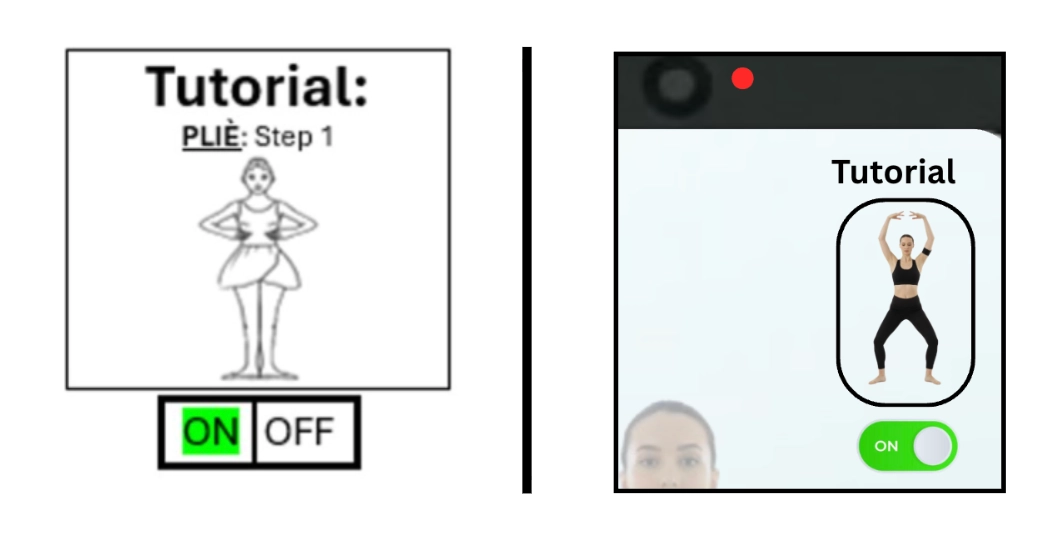
A small, always-visible tutorial gives the continuous guidance that ensures they remain oriented.