Skip to main content
Link
Menu
Expand
(external link)
Document
Search
Copy
Copied
# Introduction Welcome! cse482a: Fall 2026; Jennifer Mankoff (Last Edited: 2026-09-28). <a href="/courses/cse482a/26au/slides/introduction.html">Live View: /slides/introduction.html</a> Important Reminder: check zoom & captioning <a href="/courses/cse482a/26au/slides/introduction.html"><img src="https://api.qrserver.com/v1/create-qr-code/?data=/slides/introduction.html&size=100x100" alt="QR for /courses/cse482a/26au/slides/introduction.html" title="" /></a> --- <div class="slide-outline" style="margin: 1em 0; padding: 1em; background: #f5f5f5; border-radius: 5px;"> <h2 style="margin-top: 0;"> Outline </h2> <ul style="list-style-type: none; padding-left: 0;"> <li><a href="#3">Introductions</a> (Slide 3)</li> <li><a href="#8">Defining Disability</a> (Slide 8)</li> <li><a href="#22">Class Learning Goals</a> (Slide 22)</li> <li><a href="#28">Summary</a> (Slide 28)</li> </ul> </div> --- class: center, middle, inverse # Introductions --- ## J. (or Jen) Mankoff (they/she) [Make4All Lab](make4all.org) | [CREATE](create.uw.edu) I build tools that improve inclusion in *all* settings by empowering disabled creators to work, play and learn. 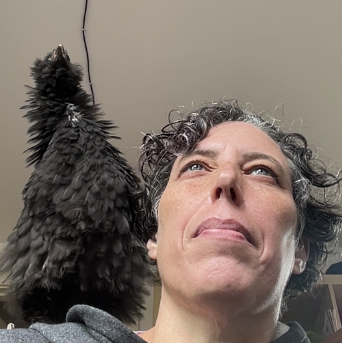 --- .left-column60[ ## Lucille Njoo (she/her) I'm a PhD student working on ethics in NLP applied to high-stakes settings like criminal justice & mental health. I'm also the co-chair of [Ability](https://ability.cs.washington.edu/)! ] .right-column40[ 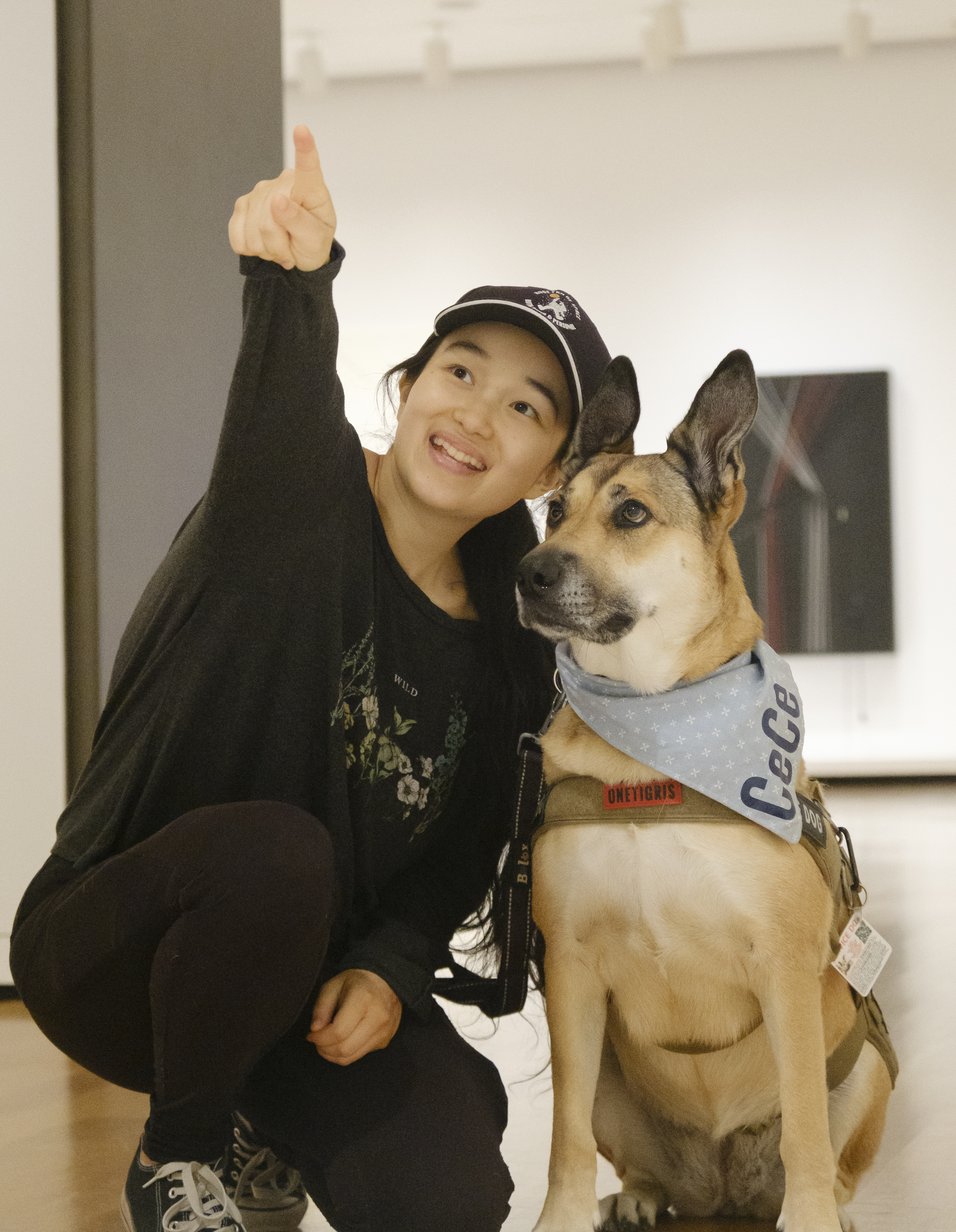 My service dog's name is CeCe! ] --- ## Introduce yourselves Discuss with at least two neighbors: What is one thing that would make your experience at UW more accessible, pleasant, or comfortable for you? --- ## This quarter's focus Accessibility in higher education --- class: center, middle, inverse # Defining Disability --- ## Disability is a context-dependent mismatch .left-column50[ **personal attribute (1980s)** 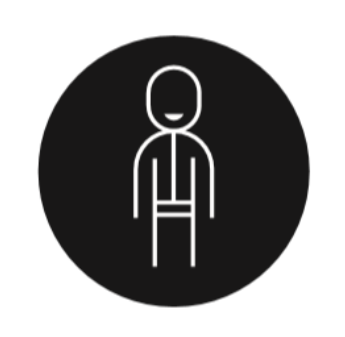 ] .left-column50[ **social/environ. attribute (1990s)** 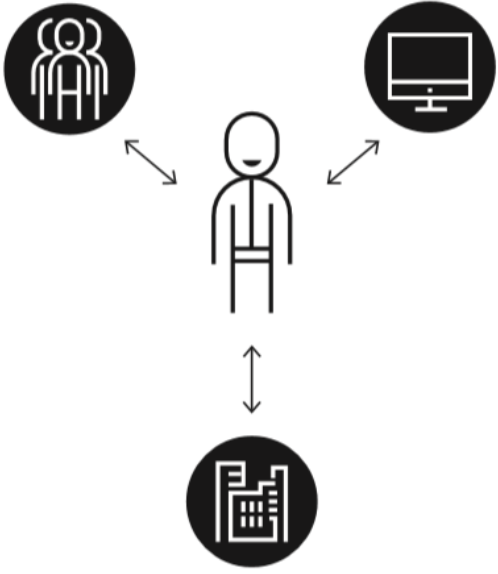 ] ??? **Disability as a personal attribute** "restriction or lack of ability ... within the range considered normal" Older views (1980s). This **medical model** asks how do we *fix people*: **Disability as a societal consequence** "the interaction between features of a person's body and ... [their] society" More recent views (2000s). This **social model** asking how do we *fix society* --- ## Neither is quite right - Medical Model: how do we fix people - Social Model: how do we fix society - Postmodern - Disability doesn't need to be fixed. - Disability is celebrated as part of human variation. - Disability pride, disability culture, and disabled joy are all things to support and celebrate. --- ## A note on language .left-column[ 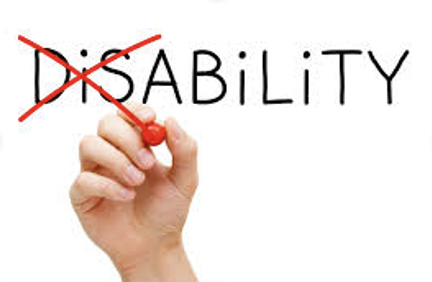 ] .right-column[ Identity-first language (“disabled people”) vs. people-first (“people with disabilities”). Preferences change depending on region, cultural context, community Avoid “stricken with”, “suffers from” or victimization language Avoid “able-bodied” or “normal” as differentiating terms ] ??? You will offend people with ableist terminology --- ## Rates of Disability are increasing Rates of disability are increasing - Aging population - Long COVID - Increasing numbers of people with chronic illness (can span disability segments) Not everyone in these groups identifies as disabled --- ## Disability is complex - People can be multiply disabled - More than one disabled person might be in the same space with different accommodations - Intersectionality with Race, Gender & other identities --- ## What is accessibility? Disabled people can spend their time and energy and joy how they want Disabled people can participate is equals in the same spaces as anyone else Disabled people can excel, thrive, and take care of themselves --- ## Role of technology Websites and apps must be built to *support access* - Many disabled people use custom technology, for person-specific support for access. - Other disabled people configure everyday technology to meet their needs by changing the font size, color and so on. Some technology is just for disabled people. Many of these innovations come from disabled people. --- ## This includes higher education - **Individuals with Disabilities Education Act** (IDEA, 1975)--Free appropriate public education in the least restrictive environment to every child with a disability. - Section 503 of the **Rehab Act** (1973)--Equal access to government services - **Americans with Disabilities Act** (1990)--Equal access to all goods/services --- ## Upcoming changes: DOJ rule - DOJ rule comes into effect in April and requires all state services are fully accessible. This includes course materials - Disabled students, faculty, and other members of the campus community frequently run into access barriers - Too often we're told fixing this is not feasible. - We're going to show them different by building solutions! --- ## Accommodation Accommodation is your right - Co-producing access for all participants in a space or event - Sometimes helped by software & media, some [free](https://depts.washington.edu/uwdrs/technology/) - Legally mandated, but also so much more - Mandated by multiple laws in Higher Education (That is why UW has a DRS office) - Ongoing and constant legal challenges, especially to the [ADA](http://www.webaim.org/coordination/law/us/ada) ??? 147 countries have ratified the **UN Convention on Rights of PD** (2006) 1996 ADA complaint against San José Use of PDF inaccessible to city commissioner Web sites are a “service” and thus subject to the ADA Led to S. J. Web Page Disability Access Standard 1999 Natn’l Fed. of the Blind against AOL Based on the interpretation of the Web as a place of public accommodation (ADA) Settled out of court 2000: AOL agreed to make its browser accessible Many others (http://www.webaim.org/coordination/law/us/ada) --- ## This class is designed to accommodate By now I've emailed each student who has formal access requests But I want everyone to feel welcome. Please let me know if you have an access need that is not being met --- ## Ultimate goal: Emancipatory design - Find ways to support participants with disabilities to become researchers/designers in their own capacity - Address power dynamics - Be accountable. Our skills are at the disposal of our users .footnote[Mike Oliver: [Emancipatory Research [PDF]](https://disability-studies.leeds.ac.uk/wp-content/uploads/sites/40/library/Oliver-Mikes-paper.pdf)] --- ## My approach to disability inclusion 1. Advocate for the inclusion of people with disabilities in higher education ad research 2. Seek out and support students who have first person experience with disability (and are also excellent students) 3. Work to be an ally to them so that they can succeed 4. Engage with the disability community in selecting problems and sharing results 5. Include disabled community members who contribute strongly to projects ??? In my own work, I try to do the following. Can any of this translate? --- class: center, middle, inverse # Class Learning Goals --- ## ABET Student Outcomes (1/3) - identify, formulate, and solve complex engineering problems by applying principles of engineering, science, and mathematics (*Overall Class*) - function effectively on a team whose members together provide leadership, create a collaborative and inclusive environment, establish goals, plan tasks, and meet objectives (*Overall Class*) - acquire and apply new knowledge as needed, using appropriate learning strategies. (*Overall Class*) --- ## ABET Student Outcomes (2/3) - apply engineering design to produce solutions that meet specified needs with consideration of public health, safety, and welfare, as well as global, cultural, social, environmental, and economic factors (*Accessible Implementation*; *Inclusive, Person-centered Design*) - recognize ethical and professional responsibilities in engineering situations and make informed judgments, considering impact in global, economic, environmental, and societal contexts (*Design/Disability Justice*; *Inclusive, Person-centered Design*) --- ## ABET Student Outcomes (3/3) - develop and conduct appropriate experimentation, analyze and interpret data, and use engineering judgment to draw conclusions (*Inclusive Experiments*) - communicate effectively with a range of audiences (*Accessible Communication*) --- ## Where to find the class The class is on the [web](/courses/cse482a/26au/index), but we link to it through [Canvas]({{site.canvas}}). We try to interlink everything as much as possible. - Class discussions and all contact with instructors should happen either in office hours or through a [class discussion board](https://edstem.org/us/courses/107577/discussion/) or [staff mailing list](mailto:{{site.staff_email}}) - You can also request appointments for further help --- ## Where your projects will live Each group will have a gitlab repository, with an associated public endpoint. Example: [Sample repository]({{site.base_repo_pages_url}}). This public deployment contains your documentation, and if relevant, a demo of your project. The private repo will have additional documentation that you hand in. --- class: center, middle, inverse # Summary --- ## Disability Philosophy - Complex - Multifaceted - Celebrated - Empowered --- ## Style Capstone class ABET accredited (practicing engineering communication) Project focused --- ## Let's talk projects! [Project Pitches](https://docs.google.com/presentation/d/1flFaC5tf6TjeM1VrrR8DNM6jzP5v8xinNzVhsIvPRpY/edit?slide=id.p#slide=id.p)
