CSE 447: Natural Language Processing, Autumn 2026
MWF 3:30–4:20 PM, MGH 389
Announcements
Oct 7: Homework 1 is out
Homework 1 (Project 1) is due October 30 at 11:59 p.m. Pacific Time. Submit your notebooks and writeup through Gradescope as described in the handout.
Oct 1: Homework 0 (optional) is out
This is an optional homework and is mainly there for you to revise Python fundamentals and get a basic introduction to PyTorch. There is an extra credit of 2% of the final grade upon the successful completion of this project.
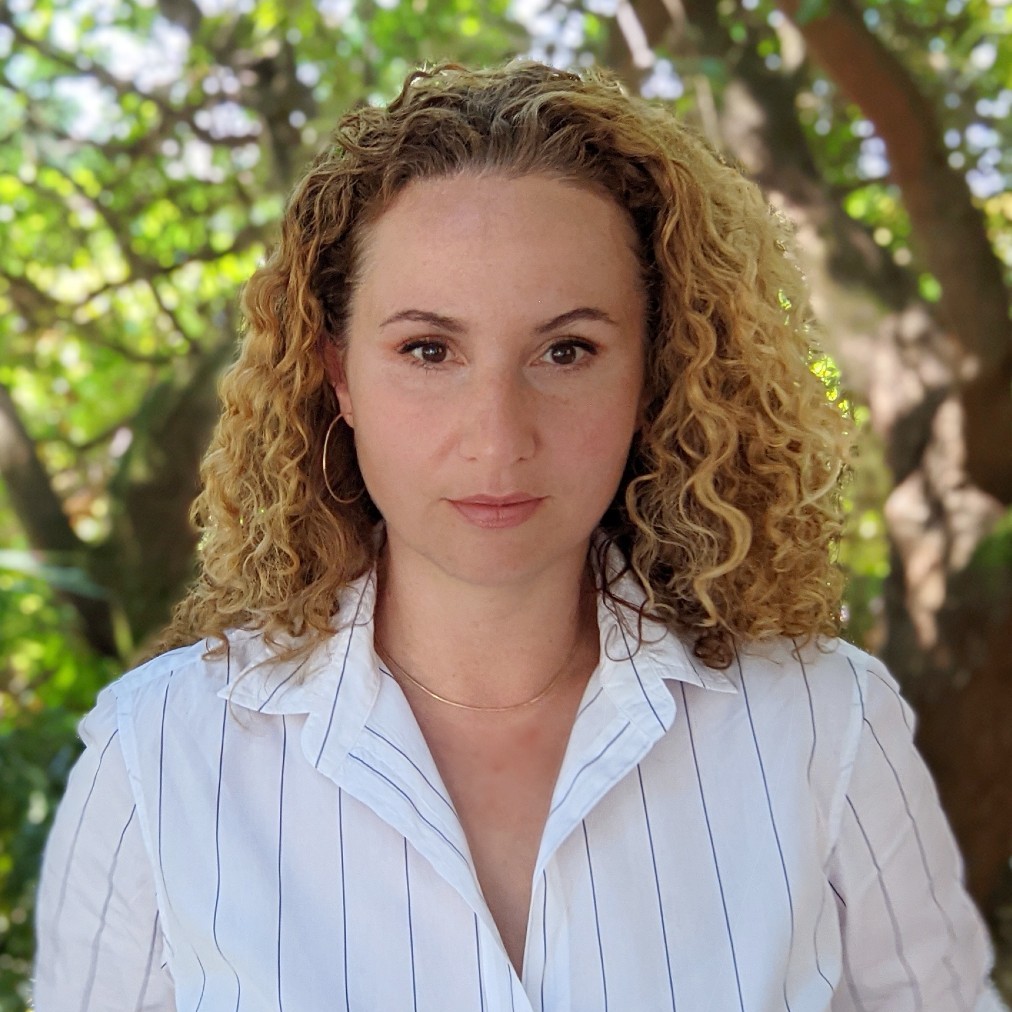

Head Teaching Assistant: Kabir Ahuja

Teaching Assistant: Arohan Agate

Teaching Assistant: Jacqueline He

Teaching Assistant: Daniel Kim

Teaching Assistant: Lev Kochergin

Teaching Assistant: Sheldon Li

Teaching Assistant: Yike Wang
Summary
This course covers methods for designing systems that intelligently process natural language text data. Topics include language models, text categorization, syntactic and semantic analysis, and machine translation, with an emphasis on algorithms and data-driven methods. The course is hands-on and project-based, focusing on building and evaluating practical NLP systems.
Prerequisites
CSE 312 and CSE 332; recommended: MATH 208. CSE 446 is recommended before or concurrently.
Calendar
The schedule is subject to change.
| Week | Lecture | Date | Topic | Readings | Quiz | Homework |
|---|---|---|---|---|---|---|
| 1 | 1 | 9/30 |
Logistics
[slides] |
Course website and syllabus | ||
| 2 | 10/2 |
Introduction
[slides] |
J&M, Chapter 1 | HW0 out | ||
| 2 | 3 | 10/5 |
Linguistics background
[slides] |
J&M, Chapter 2 | ||
| 4 | 10/7 |
HW1 overview, Quiz overview
[slides] |
HW1 out & HW1 overview | |||
| 5 | 10/9 |
Linguistics background
[slides] |
J&M, Chapter 2 | |||
| 3 | 6 | 10/12 |
Text classification
[slides] |
J&M, Chapter 4 | In-class quiz 1 | |
| 7 | 10/14 |
Text classification
[slides] |
Pang et al. (2002); Ng & Jordan (2001) | |||
| 8 | 10/16 |
Text classification
[slides] |
||||
| 4 | 9 | 10/19 |
Text classification
[slides] |
J&M, Chapter 4 | In-class quiz 2 | |
| 10 | 10/21 |
Text classification
[slides] |
J&M, Chapter 4 | |||
| 11 | 10/23 |
Text classification
[slides] |
J&M, Chapter 4 | |||
| 5 | 12 | 10/26 | Language modeling | J&M, Chapter 3 | In-class quiz 3 | |
| 13 | 10/28 | Language modeling | J&M, Chapter 3 | |||
| 14 | 10/30 | Language modeling | J&M, Chapter 3 | HW1 due | ||
| 6 | 15 | 11/2 | Lexical semantics | J&M, Chapter 5 | In-class quiz 4 | HW2 out |
| 16 | 11/4 | Distributional semantics | J&M, Chapter 5 | |||
| 17 | 11/6 | Distributional semantics | J&M, Chapter 5 | |||
| 7 | 18 | 11/9 | Neural networks | J&M, Chapter 6; Optional — J&M, Chapter 14 | In-class quiz 5 | |
| 19 | 11/11 | Neural networks: Transformers | J&M, Chapter 7 | |||
| 20 | 11/13 | LLMs — Pretraining and in-context learning | J&M, Chapter 7 | |||
| 8 | 21 | 11/16 | LLMs — Finetuning | J&M, Chapter 8 | In-class quiz 6 | |
| 22 | 11/18 | LLMs — Decoding, beam search, and sampling | J&M, Chapter 7 | |||
| 23 | 11/20 | LLMs — Prompting and chain-of-thought | The Prompt Report; arXiv:2402.13116; arXiv:2305.16635 | HW2 due | ||
| 9 | 24 | 11/23 | LLMs — Post-training and alignment | J&M, Chapter 8 | In-class quiz 7 | HW3 out |
| 25 | 11/25 | AI agents | ||||
| 11/27 | Thanksgiving — no class | |||||
| 10 | 26 | 11/30 | NLP in industry: Recommender systems and online training | |||
| 27 | 12/2 | LLM safety | Risks of LLMs, SafetyPrompts, and The Art of Saying No | |||
| 28 | 12/4 | Conclusion | In-class quiz 8 | |||
| 11 | 12/7 | Cancelled | . | |||
| 12/9 | Cancelled | HW3 due | ||||
| 12/11 | Cancelled |
Resources
- Readings
- J&M III: Speech and Language Processing (Dan Jurafsky and James H. Martin)
- Additional readings will be released weekly.
Course Policy
Please note that the quizzes are mandatory to be taken from the classroom in person only. Quizzes taken from home won’t be graded. Quizzes are closed-book: you are not allowed to refer to your notes, the textbook, or any AI tools during the quiz. Please let us know in advance if there are any DRS-related accommodations to be made for you. Students are expected to attend all classes in person. While we will try our best to have recordings available for the class, in-person attendance is expected.
You are encouraged to use AI for general questions and for brainstorming, clarification, and refinement on course work, but you may not use AI to substantially create the work for you. AI can be helpful for exploring ideas and improving drafts, provided your submitted work remains your own. We highly recommend going through UW’s vice provost for AI shares what every UW student should know about AI to learn how to make thoughtful judgments about when and how to use AI.
We will have oral exams after assignment submissions that will test your knowledge of your submitted solutions. A grade for an assignment will be awarded only if you pass its oral exam.
Note to Students
Take care of yourself! As a student, you may experience a range of challenges that can interfere with learning, such as strained relationships, increased anxiety, substance use, feeling down, difficulty concentrating and/or lack of motivation. All of us benefit from support during times of struggle. There are many helpful resources available on campus and an important part of having a healthy life is learning how to ask for help. Asking for support sooner rather than later is almost always helpful. UW services are available, and treatment does work. You can learn more about confidential mental health services available on campus here. Crisis services are available from the counseling center 24/7 by phone at +1 (866) 743-7732 (more details here).