Skip to main content
Link
Menu
Expand
(external link)
Document
Search
Copy
Copied
# Introduction Introduction to this quarter cse443: Winter 2026; Jennifer Mankoff (Last Edited: 2026-01-05). <a href="/courses/cse443/26wi/slides/introduction.html">Live View: /slides/introduction.html</a> Important Reminder: check zoom & captioning <a href="/courses/cse443/26wi/slides/introduction.html"><img src="https://api.qrserver.com/v1/create-qr-code/?data=/slides/introduction.html&size=100x100" alt="QR for /courses/cse443/26wi/slides/introduction.html" title="" /></a> --- <div class="slide-outline" style="margin: 1em 0; padding: 1em; background: #f5f5f5; border-radius: 5px;"> <h2 style="margin-top: 0;"> Outline </h2> <ul style="list-style-type: none; padding-left: 0;"> <li><a href="#4">Introductions</a> (Slide 4)</li> <li><a href="#10">Today's learning goals</a> (Slide 10)</li> <li><a href="#24">Defining Disability</a> (Slide 24)</li> <li><a href="#36">Class Access Norms & Syllabus</a> (Slide 36)</li> <li><a href="#45">Class Structure</a> (Slide 45)</li> <li><a href="#53">Grading</a> (Slide 53)</li> <li><a href="#60">Summary and Next Class</a> (Slide 60)</li> </ul> </div> --- class: center, middle, inverse # Announcements <p>Welcome to CSE 443! Please read the <a href="/syllabus.html">syllabus</a></p> --- class: center, middle, inverse # Introductions --- ## Jennifer Mankoff (they/she) [Make4All Lab](make4all.org) | [CREATE](create.uw.edu) I build tools that improve inclusion in *all* settings by empowering disabled creators to work, play and learn. 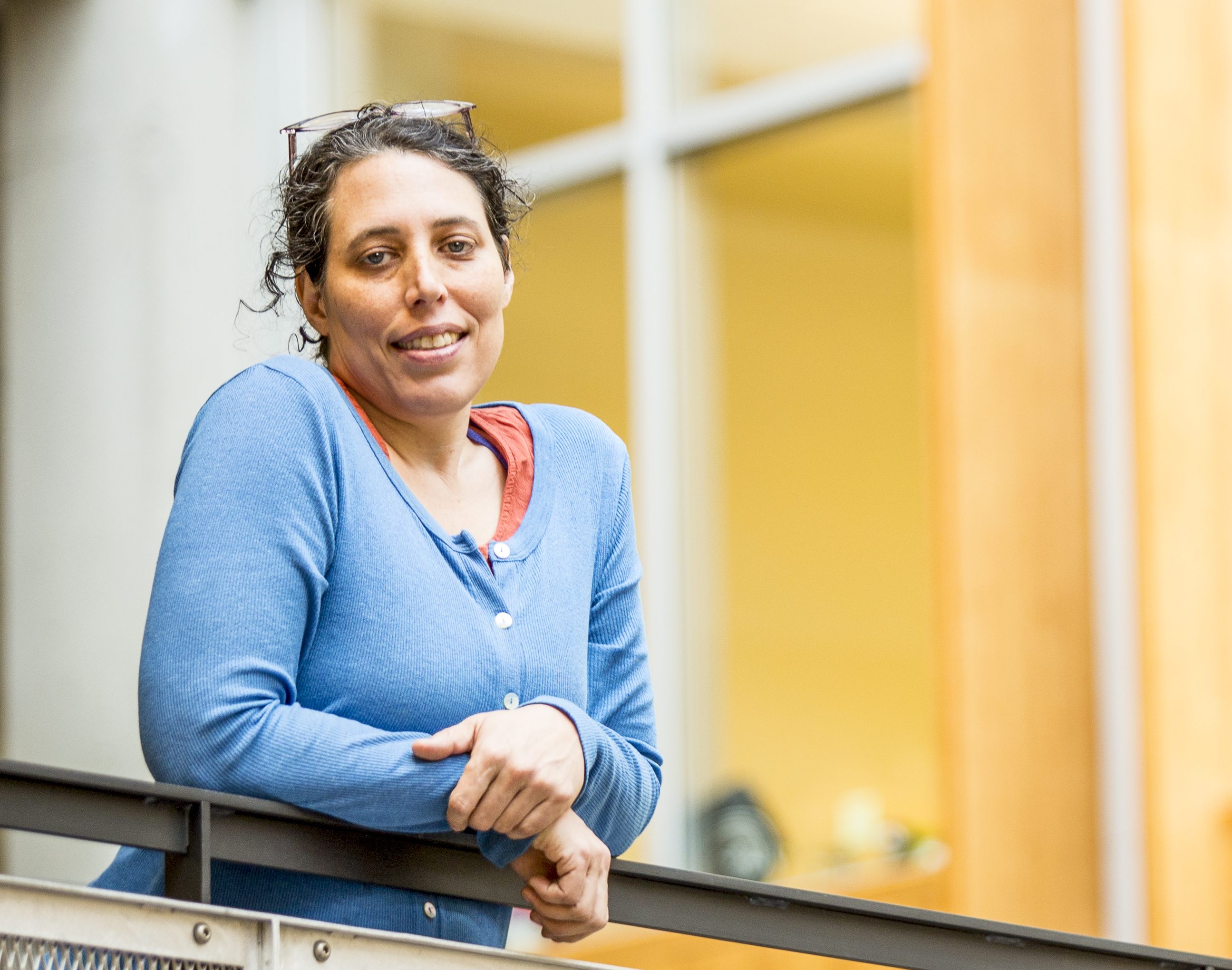 --- ## Jesse Martinez (he/they) Interactive media accessibility researcher using Theory™ to improve the versatility and accessibility of technology design. Interests: Games, weird art stuff, digital media/media theory, and my cats (Spritz & Cosmo)  --- ## Yumeng Ma (she/her) I’m a PhD student working at the intersection of AI and accessibility, currently evaluating the accessibility of large language model–generated interface code. Interests: chess, bass guitar, and illustration <img src="../assets/images/yumeng.png" alt="An Asian woman with dark wavy hair wearing a dark beanie and cream sweater, smiling outdoors against a blurred background" width="240"> --- ## Warm up <iframe src="https://embed.polleverywhere.com/free_text_polls/mWYZbXtUUel5KXqA0os7w?controls=none&short_poll=true" width="800px" height="600px"></iframe> --- ## Introduce yourselves Discuss with at least two neighbors: Do you know whether your favorite app is inclusive of one or more of the following. What does inclusion mean in an app? - Race - Gender - Disability <!-- {% include qr.html url=site.discussion %} --> <!-- {% include qr.html %} --> <!-- {% include qr.html url=site.discussion %} --> <!-- {% capture discussion %} --> <!-- site.discussion --> <!-- {% endcapture %} --> <!-- {% include qr.html url=discussion %} --> --- class: center, middle, inverse # Today's learning goals --- ## Course learning goals (1/5) 1. **Familiarity with a range of Accessibility Technologies** --- ## AT today is readily available There are lots of tutorials It's on every device You will learn just enough to be dangerous! - Information about how the AT works, users, and strengths and weaknesses of the AT. - Information about what disabilities can benefit from it. For example, screen readers are not just used by blind people. - General comfort using it to assess accessibility --- ## Access Basics How do we build accessible systems and interfaces? - Week 1: Ways of thinking about and designing for accessibility - Week 2: Accessible needfinding; How we make static documents accessible - Week 3 & 4: How we assess whether websites and apps are accessible - Week 4 & 5: How we build accessible websites and apps --- ## Accessibility In the World - How do we account for access in all of today's technologies? Example: AI & Accessibility -- - How does technology impact access in all the spaces where disabled people are present? Example: Intersectionality; Reproductive Justice --- ## Course learning goals (2/5) 1. Familiarity with a range of Accessibility Technologies 2. **Accessible Document Creation** 3. **Plain Language** --- ## How you share your work must be accessible - ALT text for images - Best practices for Word and PowerPoint accessibility - Automated accessibility checking - Best practices for plain language --- ## Course learning goals (3/5) 1. Familiarity with a range of Accessibility Technologies 2. Accessible Document Creation 4. Plain Language 5. **Disability Model Analysis** --- ## Critical Viewpoints on Disability Work 1. Understanding how to apply critical models 2. Recognizing ableism & other tropes --- ## Course learning goals (4/5) 1. Familiarity with a range of Accessibility Technologies 2. Accessible Document Creation 4. Plain Language 5. Disability Model Analysis 6. **Finding First-Person Accounts of Accessibility Tech** --- ## Learning Goals ≡ Competencies We use *competency based grading* because it prioritizes *accessibility* and *justice* and *flexibility* for students. **Traditional grading** focuses on completion of required tasks | 85% projects | 15% participation | |--------------|--------------------------| | *project 1* | *class attendance* | | project 2 | asking question in class | | ... | ... | --- ## What is competency-based grading? **Competency-based grading** focuses on evidence of progress and learning | learning goal 1 | learning goal 2 | learning goal 3 | |------------------------------|---------------------|----------------------------| | *Evidence: Project 1* | Evidence: Project 1 | Evidence: Project 2 | | *Evidence: Project 2* | Evidence: Project 3 | Evidence: Project 4 | | *Evidence: Final Project* | | Evidence: Discussion post | | ... | ... | ... | -- Teaching and learning are centered around *learning outcomes*. This changes how we plan, assess and grade the course. --- class: center, middle, inverse # Defining Disability ---  --- ## Disability is a context-dependent mismatch .left-column50[ **1980** 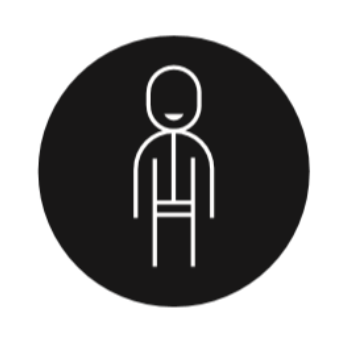 **A personal attribute** *"restriction or lack of ability ... within the range considered normal for a human being"* (medical model: How do we *fix people*) ] .left-column50[ **1990s** 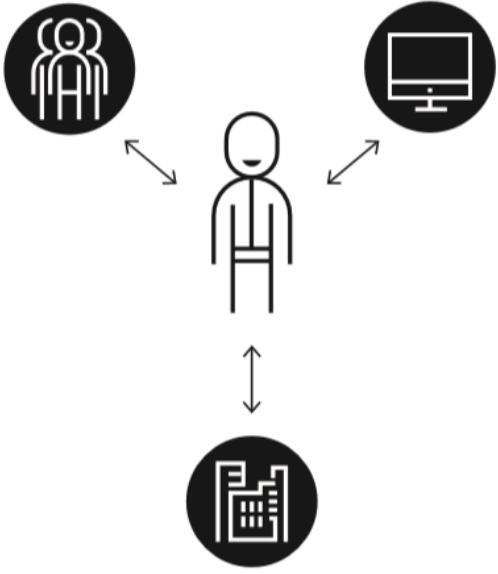 **A social/environmental attribute** *"the interaction between features of a person's body and features of the society in which they live"* (social model: how do we *fix society*) ] ??? **Disability as a personal attribute** "restriction or lack of ability ... within the range considered normal" Older views (1980s). This **medical model** asks how do we *fix people*: **Disability as a societal consequence** "the interaction between features of a person's body and ... [their] society" More recent views (2000s). This **social model** asking how do we *fix society* --- ## Neither is quite right - Medical Model: how do we fix people - Social Model: how do we fix society - Postmodern - Disability doesn't need to be fixed. - Disability is celebrated as part of human variation. - Disability pride, disability culture, and disabled joy are all things to support and celebrate. --- ## Worldwide Stats |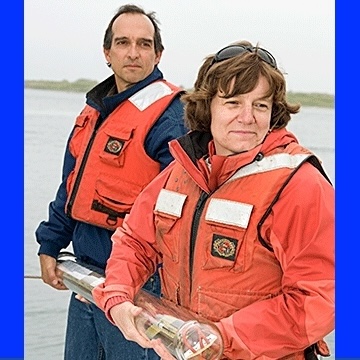 |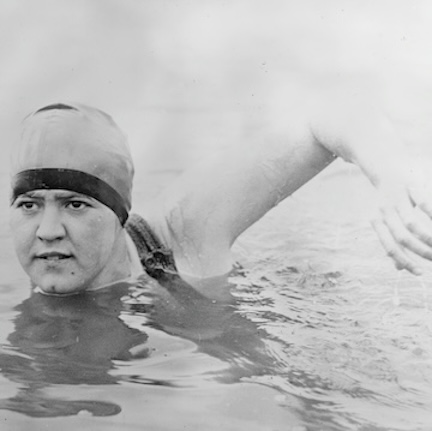| |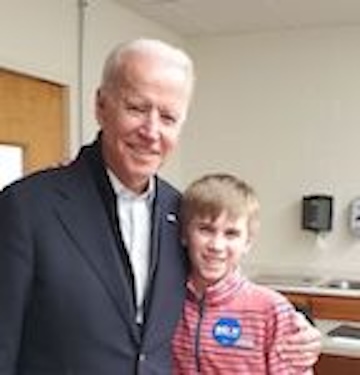 |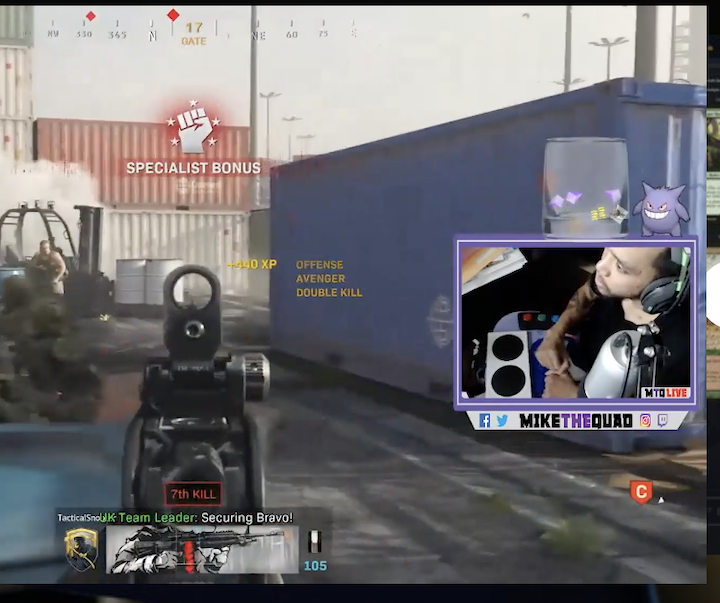 | |--------|----------------|--------|----------|---------------| | BVI | DHH | Neurodiverse | Speech | Mobility | | [Amy Bower](https://www.perkins.org/resource/amy-bower-oceanographer-who-blind/) | [Gertrude Ederle](https://www.imdb.com/title/tt5177114/) | [Temple Grandin](https://en.wikipedia.org/wiki/Temple_Grandin) | [President Biden](https://barryyeoman.com/2008/08/dnc-day-three/) | [MikeTheQuad](https://www.twitch.tv/mikethequad) ([Wired](https://www.wired.com/story/disabled-streamers-transforming-games-industry/?_sp=412f0550-b4c6-48d9-8161-bb47f34ee59d.1767382708358)) | | *Colorblind*<BR>*Visual Impairment*<BR>*Blind* | *Hearing loss* <BR> *Deaf* | *Dyslexia* <BR> *Autism* <BR> *PTSD* <BR> *Mental Health*</BR> | *Stutter* <BR> *Nonspeaking* <BR> *Dyspraxia* | *Quadriplegia* <BR> *Limb different* <BR>*Motor Control* | 1 Billion (~15%) of population [WHO'11]; 19% of USA [Census'12] ??? call out that you don't have to be famous to be proud of being disabled call out multiple disabilities --- ## Inspiration Porn (stop at 4:29) <iframe width="560" height="315" src="https://www.youtube.com/embed/8K9Gg164Bsw?si=IPVbZOZWZ8myOjfW" title="YouTube video player" frameborder="0" allow="accelerometer; autoplay; clipboard-write; encrypted-media; gyroscope; picture-in-picture; web-share" referrerpolicy="strict-origin-when-cross-origin" allowfullscreen></iframe> --- ## A note on language .left-column[ 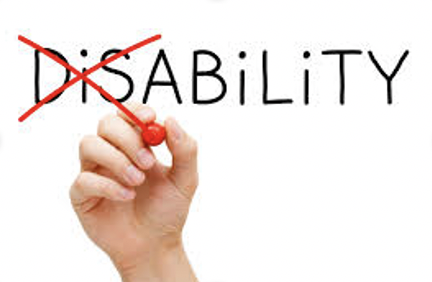 <BR> You will offend people with ableist terminology ] .right-column[ Identity-first language (“disabled people”) vs. people-first (“people with disabilities”). Preferences change depending on region, cultural context, community Avoid “stricken with”, “suffers from” or victimization language Avoid “able-bodied” or “normal” as differentiating terms ] --- ## Rates of Disability are increasing Rates of disability are increasing - Aging population - Long COVID - Increasing numbers of people with chronic illness (can span disability segments) Not everyone in these groups identifies as disabled --- ## Don't oversimplify - People can be multiply disabled - More than one disabled person might be in the same space with different accommodations - Intersectionality with Race, Gender & other identities --- exclude: true --- ## Accommodation Accommodation is your right - Co-producing access for all participants in a space or event - Sometimes helped by software & media, some [free](https://depts.washington.edu/uwdrs/technology/) - Legally mandated, but also so much more - Mandated by multiple laws in Higher Education (That is why UW has a DRS office) - Ongoing and constant legal challenges, especially to the [ADA](http://www.webaim.org/coordination/law/us/ada) ??? 147 countries have ratified the **UN Convention on Rights of PD** (2006) 1996 ADA complaint against San José Use of PDF inaccessible to city commissioner Web sites are a “service” and thus subject to the ADA Led to S. J. Web Page Disability Access Standard 1999 Natn’l Fed. of the Blind against AOL Based on the interpretation of the Web as a place of public accommodation (ADA) Settled out of court 2000: AOL agreed to make its browser accessible Many others (http://www.webaim.org/coordination/law/us/ada) --- ## Some US laws - **Individuals with Disabilities Education Act** (IDEA, 1975)--Free appropriate public education in the least restrictive environment to every child with a disability. - Section 503 of the **Rehab Act** (1973)--Equal access to government services - **Americans with Disabilities Act** (1990)--Equal access to all goods/services --- ## Accessibility Research is more than accommodation - Multi person systems - Mobile systems - Data Equity: Visualization and Machine Learning - Making Accessibility: Fabrication and IOT - AR/VR - Sustainability - Housing, Unhoused, and Incarcerated - Healthcare technology & reproductive justice - Higher Education - ... --- class: center, middle, inverse # Class Access Norms & Syllabus --- ## How is this class accessible? (1/3) Many disabilities benefit from flexibility in how time is spent -- - Up to two late days *per assignment* for assignment completion, no questions asked - If you need further accommodations for any reason, talk to us and consider working with [DRS](https://depts.washington.edu/uwdrs/) as well. - Multiple opportunities to try competencies → Where possible, we provide those as a standard part of the class. --- <iframe src="https://embed.polleverywhere.com/discourses/NhtrtusWPFLTgCAFvbvc1?controls=none&short_poll=true" width="800px" height="600px"></iframe> --- ## Small Group Discussion How would you implement this in your lab or workplace? --- ## How is this class accessible? (2/3) Sometimes students with disabilities, such as chronic illness or mental health concerns may need to miss class. Other students (and your instructor) may have higher risk for COVID. -- - Please request the recorded video when you have an access need, a cold, flu, or suspected COVID symptoms. - Same for a disability accommodation - We will *work to ensure* you have an equal experience. Outside of this, or travel, **in-person attendance is expected** --- exclude: true ## How do I receive participation credit when remote? 1. You arrange for a zoom buddy ahead of class 2. You *attend via Zoom* with the help of your zoom buddy 3. You *participate meaningfully in that day's in-class activities* 4. You *report how your participation went* using the [reporting form](https://forms.gle/3g5GXZscUgvFtES76) --- ## How is this class accessible? (3/3) We commit to mutually working together to make it accessible. - DRS approval is required for some accommodations (specifically, those that are not available to the entire class) - But many accommodations benefit most students. → where possible, we provide those as a standard part of the class. ??? This is a form of *disability justice* Why disability justice? because access to disability documentation and comfort with disclosure are both things that are inequitably distributed --- ## Access is also for the teaching staff Once you learn how to make the course more accessible to the teaching staff, please do. - Turn in accessible documents for grading (e.g. you should always provide ALT text for your images and captioned videos). - Communicate through the discussion board or mailing list rather than emailing us individually - Support us and each other in creating access for the whole class --- class: center, middle, inverse # Class Structure --- ## Weekly Rhythm **Monday**: Lecture; Reading questions due; HW due **Wednesday**: Lecture and/or Guest Speaker; Next HW out **Friday**: Lecture and/or Studio --- ## Other Important Facts about this Class - **Language**: I am Jen (preferred), or Dr. Mankoff or Prof. Mankoff - **Religious Holidays**: Let me know if they will impact your participation - **Inclusivity**: An important value in this class, and in HCI! --- ## A little more on Inclusivity - Inclusivity does not (and should not) require disclosure, this goes for accessibility and ANYTHING else - How can you ask for help without violating privacy or boundaries? I won't make you justify your requests for help or accommodations or pry into your life. - Especially because Biden's new Title IX regulations make me a mandatory reporter. ??? This is the most important thing I’m going to talk about today. --- ## A Note on Academic Integrity Don't plagiarize. If you use text, quote it and reference it. Sharing is fine, but don't copy from each other. See our [syllabus](../syllabus.html) page for more details Why? UW policy and [*Citational Justice*](https://www.nature.com/articles/d41586-022-00793-1) and thus an important expression of disability justice values in our class. --- ## GAI rules 1/2 You may use GAI for assignments and exams unless I specify that it may not be used or other guidelines. However: - Cite the AI program you used in the artifact you hand in - If it copies text or closely copies ideas from other sources, you must cite those sources - Do not use generative AI to plagiarize or cheat. For example, you may not use AI to create fake data and pass that off as based on real people. --- ## GAI rules 2/2 You will be held to the same standards when you use generative AI as for any assignment, regardless of whether you or the AI created something, including: - If you turn in artifacts that are not accessible, you will be graded accordingly - If you turn in assignments based on ableist claims - If you turn in artifacts that contain false or incomplete claims, you will be graded accordingly - You will be graded based on critical thinking and writing skills. --- ## Where to find what* The class is on the [web](/courses/cse443/26wi/index), but we link to it through [Canvas]({{site.canvas}}). We try to interlink everything as much as possible. - Class discussions and all contact with instructors should happen either in office hours or through a [class discussion board](https://edstem.org/us/courses/90089/discussion/) or [staff mailing list](mailto:{{site.staff_email}}) - You can also request appointments for further help --- class: center, middle, inverse # Grading --- ## Competencies Competencies are your base grade and the core learning goals in this class. - We assess them twice each - The final assessment determines your grade - After you've completed a competency twice, you can request a regrade - If you learn them all well, you will do well in the class --- ## How Competencies Translate to Grades - On any competency, you may be rated as below competent, competent or excellent. - There are 6 competencies total - All competencies are weighted equally. You can get a B in the class if you are competent on them all. You need to be excellent on them all to get an A --- ## Getting to excellent - You get two tries on every competency. The first is a group handin; the second is individual - Most students get "competent" or below on their first try - This usually goes up on the second try. Once you've submitted an individual attempt, we will allow regrade requests --- ## Final Project Competency Adjustment Final Project is also assessed on competencies - A non-competent can bring an individual competency score down by up to one point - Bringing a competency up requires and individually submitted re-assessment request and attestation regarding your individual contributions to that specific competency --- ## Engagement Engagement can bring a grade up - Examples: - Share an example of using something in this class somewhere else in your life - Completing an optional assignment (such as laser cutting) - Turning in answers to most reading questions - Doing extra work on an assignment - Consistently engage in class, in person --- ## Applied Effort Assignment completion and participation is required. - Non-completion can reduce your competency grade by up to 50% (if you complete no assignments) --- class: center, middle, inverse # Summary and Next Class --- ## Class Philosophy - Accessibility is built in - Includes how we teach and how we grade (Competencies) --- ## Disability Philosophy - Complex - Multifaceted - Celebrated - Empowered --- --- ## Next class - First Person Accounts - Disability Justice - Disability Dongles - First assignment
