Accessibility Capstone Intro
Course syllabus and structure
2025-01-02
Announcements
Learning Goals
Announcements
Introductions
Course learning goals
Models of Disability and Accessibility
Class Access Norms & Syllabus
Quick Reminder
- Turn on captioning
- Turn on recording
Introductions
Learning Goals
Announcements
Introductions
Course learning goals
Models of Disability and Accessibility
Class Access Norms & Syllabus
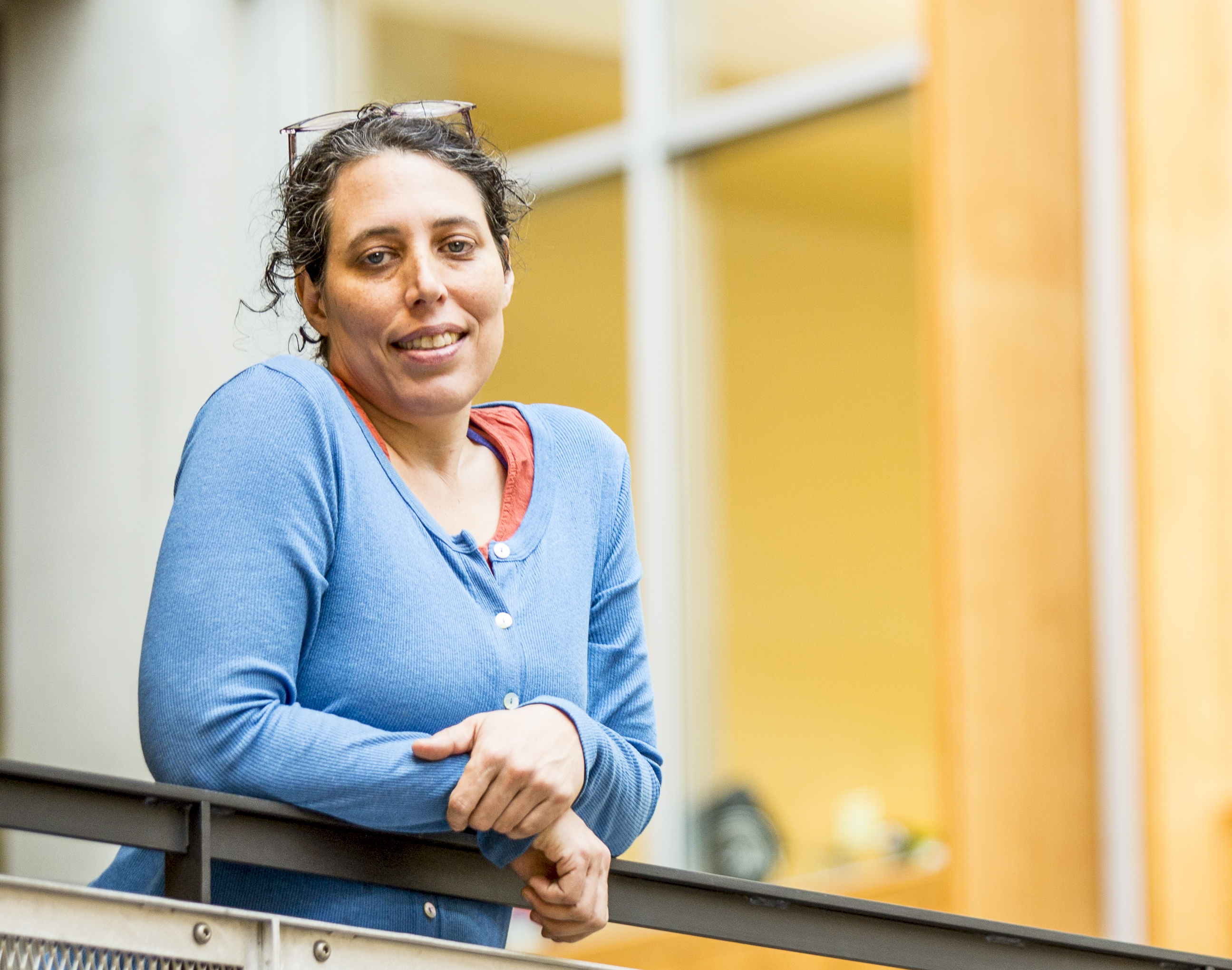
Jennifer Mankoff (she/her)
I use technology to improve inclusion in and accessibility of our digital future.
Course learning goals
Learning Goals
Announcements
Introductions
Course learning goals
Models of Disability and Accessibility
Class Access Norms & Syllabus
Design and Disability Justice
How does technology impact access in all the spaces where disabled people are present?
How can we apply principles of engineering and human centered design to improve this?
How can we do this in an inclusive fashion that includes diverse disabled people?
ABET Student Outcomes (1/3)
- an ability to identify, formulate, and solve complex engineering problems by applying principles of engineering, science, and mathematics
- an ability to apply engineering design to produce solutions that meet specified needs with consideration of public health, safety, and welfare, as well as global, cultural, social, environmental, and economic factors
- an ability to communicate effectively with a range of audiences
ABET Student Outcomes (2/3)
- an ability to recognize ethical and professional responsibilities in engineering situations and make informed judgments, considering impact in global, economic, environmental, and societal contexts
- an ability to function effectively on a team whose members together provide leadership, create a collaborative and inclusive environment, establish goals, plan tasks, and meet objectives
ABET Student Outcomes (3/3)
- an ability to develop and conduct appropriate experimentation, analyze and interpret data, and use engineering judgment to draw conclusions
- an ability to acquire and apply new knowledge as needed, using appropriate learning strategies.
Models of Disability and Accessibility
Learning Goals
Announcements
Introductions
Course learning goals
Models of Disability and Accessibility
Class Access Norms & Syllabus
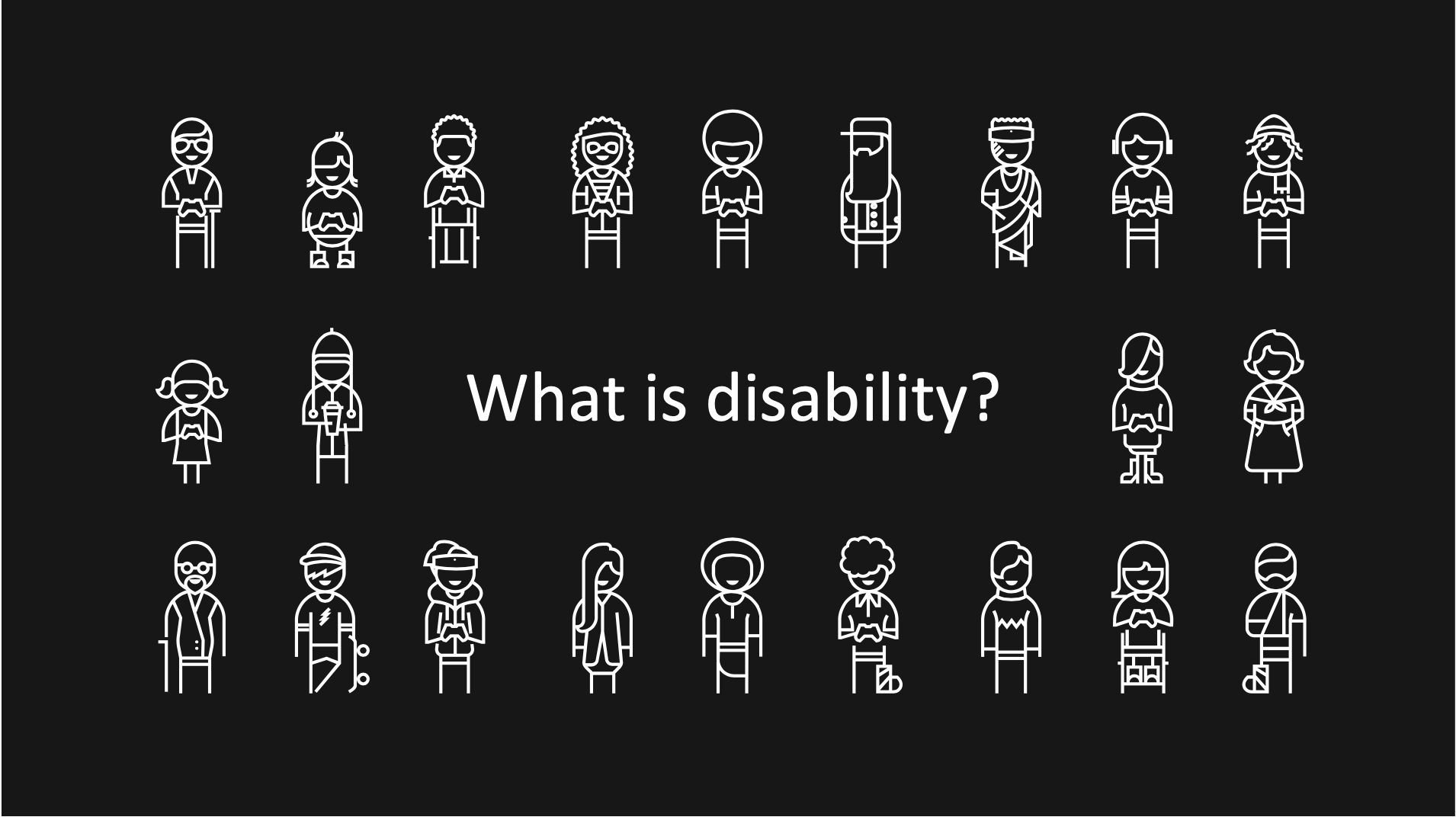
Disability is a context-dependent mismatch
1980
Disability as a personal attribute “restriction or lack of ability … within the range considered normal”
Is a medical model asking how do we fix people
2000ish
Disability as a societal consequence “the interaction between features of a person’s body and … [their] society”
Is a social model asking how do we fix society
Neither is quite right
- Medical Model (how do we fix people)
- Social Model (how do we fix society)
Postmodern–Disability doesn’t need to be fixed, but celebrated as part of human variation. Disability pride, disability culture, and disabled joy are all things to support and celebrate.
Don’t oversimplify
- People can be multiply disabled
- More than one disabled person might be in the same space with different accommodations
Accommodation
Accommodation is your right
Some US laws
- Individuals with Disabilities Education Act (IDEA, 1975)–Free appropriate public education in the least restrictive environment to every child with a disability.
- Section 503 of the Rehab Act (1973)–Equal access to government services
- Americans with Disabilities Act (1990)–Equal access to all goods/services
Intersectionality
- Definition
Discussion: Representations of identity in technology
- Race
- Gender
- Disablity
- More than one
Class Access Norms & Syllabus
Learning Goals
Announcements
Introductions
Course learning goals
Models of Disability and Accessibility
Class Access Norms & Syllabus
How is this class accessible? (1/3)
Many disabilities benefit from flexibility in how time is spent
In our class this means:
- We have tried to structure the class to support you ( For example, you have up to two late days per assignment for assignment completion, no questions asked).
- If you need further accommodations for any reason, talk to us and consider working with DRS as well.
How is this class accessible? (2/3)
Sometimes students with disabilities, such as chronic illness or mental health concerns (which are both very common disabilities among college students) may need to participate in class remotely.
Also some disabled students may be at high risk for COVID, and should not have to worry that attending class could cause them to become ill.
In our class, this means:
- We provide for hybrid participation
- We provide masks
- We attend class remotely if we have cold, flu, or suspected COVID symptoms
How is this class Hybrid?
Attendance is expected, by everyone in the class unless you have an access need. However we allow remote participation and work to ensure that students who temporarily cannot do that to have an equal experience. Example reasons to attend remotely:
- You have cold or flu symptoms or suspect you have COVID
- You have mental health concerns or any accessibility needs that are temporarily best met by being remote
How do I participate synchronous remote?
- You find a zoom buddy from your project group
- You attend via Zoom with the help of your zoom buddy
- You contribute a discussion post to every small group discussion linked to in the class schedule/slides
- You fill out the remote participation survey
How is this class accessible? (3/3)
We commit to mutually working together to make it accessible.
- DRS approval is required for some accommodations (specifically, those that are not available to the entire class)
- But many accommodations benefit most students. This is a form of disability justice
In our class, this means that where possible, we provide those as a standard part of the class.
Other Important Facts about this Class
- Language: I am Jen (preferred), or Dr. Mankoff or Prof. Mankoff
- Respect: This class is a compact between us based on respect
- Religious Holidays: Let me know if they will impact your participation
- Inclusivity: An important value in this class, and in HCI!
A little more on Inclusivity
Inclusivity does not (and should not) require disclosure, this goes for accessibility and ANYTHING else
How can you ask for help without violating privacy or boundaries? I won’t make you justify your requests for help or accommodations or pry into your life.
I’m happy to talk about my disability anytime though.
A Note on Academic Integrity
Don’t plagiarize. If you use text, quote it and reference it. Sharing is fine, but don’t copy from each other.
UW policy and Citational Justice and thus an important expression of disability justice values in our class. Therefore
See our Academic Conduct page for more details
GAI rules (Full Rules) 1/2
You may use GAI for assignments and exams unless I specify that it may not be used or other guidelines. However:
- Cite the AI program you used in the artifact you hand in
- If it copies text or closely copies ideas from other sources, you must cite those sources
- Do not use generative AI to plagiarize or cheat. For example, you may not use AI to create fake data and pass that off as based on real people.
GAI rules (Full Rules) 2/2
You will be held to the same standards when you use generative AI as for any assignment, regardless of whether you or the AI created something, including:
- If you turn in artifacts that are not accessible, you will be graded accordingly
- If you turn in artifacts that contain false or incomplete claims, you will be graded accordingly
- You will be graded based on critical thinking and writing skills.
Weekly Rhythm
Monday: Lecture; Reading questions due
Wednesday: Critique and HW for critique due
Friday: HW out and some HW due
Assignments
Client engagement
Lo-Fi testing
Build out
Final presentation
Field trip to schedule
Where to find what
The class is on the web, but we link to it through Canvas. We try to interlink everything as much as possible.
- Class discussions and all contact with instructors should happen either in office hours or through a class discussion board or staff mailing list